
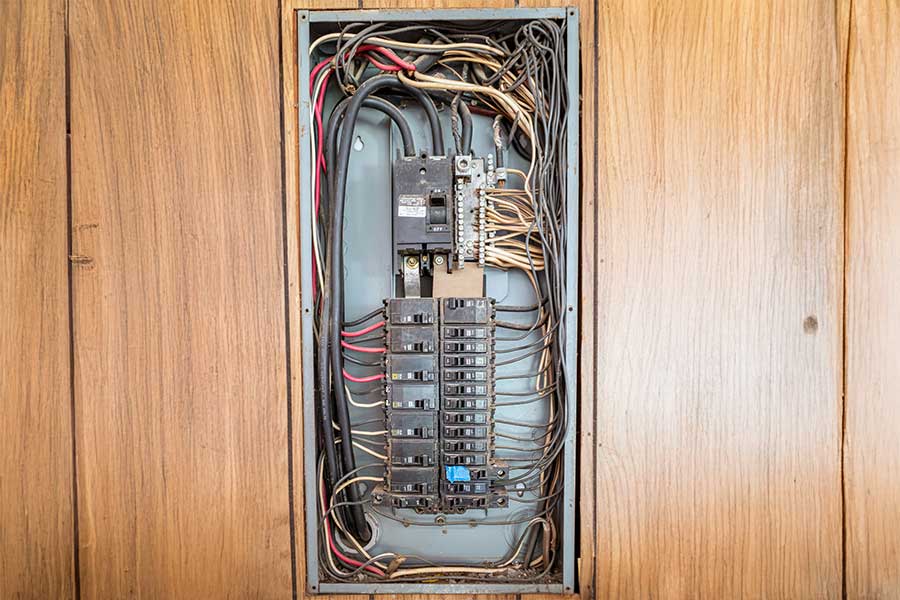
Durham homeowners manage an unusually varied range of electrical conditions. Older homes near Duke’s East Campus and in the historic districts off Main Street were built for electrical loads that bear almost no resemblance to what a modern household demands. Newer construction in areas like Southpoint and Hope Valley has its own set of considerations. Understanding what wiring problems look like, and how to respond to them, gives you the confidence to manage your home’s electrical health effectively.
Recognizing Urgent Electrical Wiring Problems at Home
Some electrical problems give you time to address them in an orderly way. Others indicate conditions that are dangerous right now and warrant immediate action.
Flickering lights that are widespread, not isolated to a single fixture, suggest either a loose connection in the wiring or an overloaded circuit. These aren’t cosmetic issues. They indicate the wiring is under stress. A burning smell near outlets, switches, or the panel means insulation is overheating or melting, and this requires the same urgency as a smoke alarm.
Warm outlets or switch covers indicate heat accumulation at the connection, a precursor to more serious failure. Buzzing sounds from outlets or switches often indicate electrical arcing, which is a direct fire hazard. Frequent circuit breaker trips on the same circuit point to an overload or a fault that needs professional diagnosis.
Electrical panel repair and replacement addresses many of the root causes of these urgent symptoms, particularly in older Durham homes where original panels were undersized for modern demand.
Diagnosing Electrical Problems in Your Home
Systematic diagnosis is more effective than guesswork. A few structured checks help narrow down where a problem is coming from.
- Check for flickering lights and note whether they’re isolated to one room, one circuit, or widespread. Isolated flickering typically indicates a localized connection issue. Widespread flickering points to the panel or a main wiring problem.
- Listen for buzzing sounds at outlets or switches. These indicate active electrical arcing or a loose connection carrying current.
- Test non-working outlets with a voltage tester to confirm they have no power, and check the GFCI protection and breaker status first.
- Monitor circuit breakers for patterns. If the same breaker trips repeatedly, it’s telling you something specific about the load or condition of that circuit.
Consistent appliance and HVAC function also provides diagnostic information. If high-draw equipment regularly causes lights to flicker or breakers to trip, the circuit serving that equipment may be undersized.
Solutions for Common Electrical Wiring Problems
The right solution depends on the specific problem, but several approaches address the most common issues in Durham homes.
Loose connections and frayed wires should be identified and repaired by a licensed electrician. These are not appropriate for DIY correction and represent real safety risks. Upgrading the electrical panel is the foundational improvement for homes where the original panel can’t support modern loads. It resolves multiple symptoms simultaneously and creates capacity for future additions.
Installing whole-home surge protection safeguards electronics and appliances from voltage spikes, particularly relevant in areas prone to thunderstorms. For homeowners adding EV charging, dedicated EV charger installation ensures the charging circuit doesn’t compete with other household loads. For properties where power reliability is a priority, whole-home generator installation provides backup capacity during outages, a consideration worth taking seriously given the Triangle’s storm patterns.
Minor issues, including GFCI outlet resets, breaker resets after an obvious overload, and bulb replacements, are reasonable to handle yourself. Anything beyond that level of simplicity belongs with a licensed electrician.
Essential Safety Tips for Handling Electrical Issues
Electrical work carries real risks, and even basic troubleshooting has rules worth following.
- Always turn off power at the breaker before touching any wiring, outlet, or electrical box, and verify with a voltage tester that the circuit is actually de-energized before you proceed.
- Use insulated tools rated for electrical work. Standard screwdrivers and pliers are not designed for this purpose.
- Inspect electrical boxes and outlets for moisture. Water and electricity create dangerous conditions that aren’t always obvious from the outside.
- Avoid overloading circuits. The temptation to add more devices to an existing outlet strip is one of the most common ways homeowners create the conditions for fires.
Thoughtfully designed indoor lighting installation, properly circuited and installed to code, eliminates some of the common improvisations that create safety hazards in residential wiring.
When to Call a Professional Electrician in Durham, NC
The threshold for calling a professional is lower than many homeowners assume. If you notice flickering lights, burning smells, warm outlets, or repeated breaker trips, those are calls worth making, not conditions to monitor over time. If you’re planning to add new outlets, upgrade your panel, or install high-draw equipment like EV chargers or HVAC systems, professional involvement is how the work gets done safely and to code.
If you’re uncertain about a repair or feel uncomfortable with the complexity of what you’re looking at, that uncertainty is the right signal to stop and call someone. The cost of professional electrical service is consistently lower than the cost of repairing damage from an electrical fire or from incorrect work that fails an inspection.
Our team serves homeowners throughout Durham, from older neighborhoods near the Durham Bulls Athletic Park to newer construction off the Durham Freeway. We’re equipped for electrical panel upgrades, circuit additions, EV charger installations, and diagnostic work on systems of all ages.
Taking a Proactive Approach to Your Home’s Electrical Health
Understanding what your home’s electrical system is telling you, and knowing when to act on those signals, puts you ahead of the most costly and dangerous outcomes. Durham’s housing stock presents a wide range of electrical conditions, and the homes that stay safest over time are the ones where owners pay attention and address problems early.
Contact our team today and let us help you understand exactly where your electrical system stands.